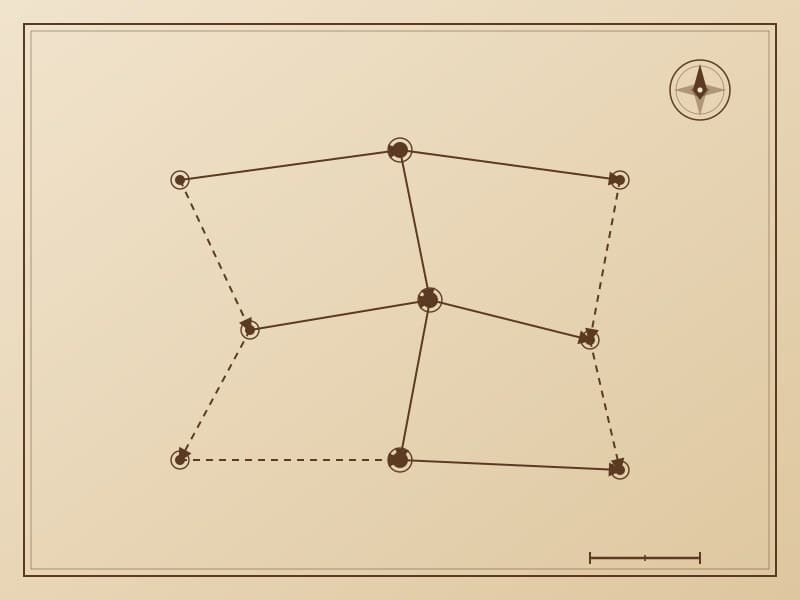
Trade Routes Map
The trade routes map records the traditional exchange networks between the Evenki people and other ethnic groups. Routes are shown as double lines (distinct from single-line migration routes), marking trading posts, market locations, and major trade goods—furs, antlers, birch bark products, medicinal herbs, etc.
Cultural Significance
The Evenki people did not survive in isolation but maintained active exchange with surrounding ethnic groups through trade networks. The Qing Dynasty tribute fur system was the most important official trade channel—the Dulaer Clan gained court rewards by tributing furs with burnt motifs. The trade routes map reveals the historical role of the Evenki people as a northern forest trade hub.
Related Patterns
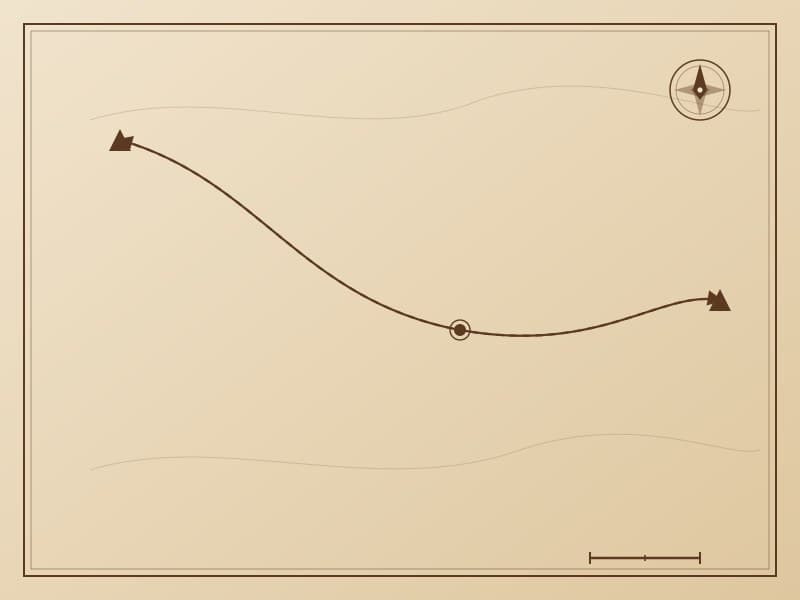
Migration Route Map
The migration route map is the most representative of Evenki narrative map patterns, using line networks to record generations of seasonal migration routes. Different line thicknesses and elevations represent different levels of migration paths—trunk routes, branch routes, and temporary routes.

Clan Territory Map
Clan territory maps use boundary lines and totem symbols to indicate the traditional territorial areas of different clans. Each clan's territory is marked with a unique totem symbol—the Dulaer Clan is represented by the antler pattern. Boundaries reference natural landforms (ridgelines, rivers), with blue indicating water boundaries and brown indicating ridge boundaries.